An extract from a vine used in Chinese medicine for centuries cut binge-drinking days when people took it only before nights out, a double-blind trial found

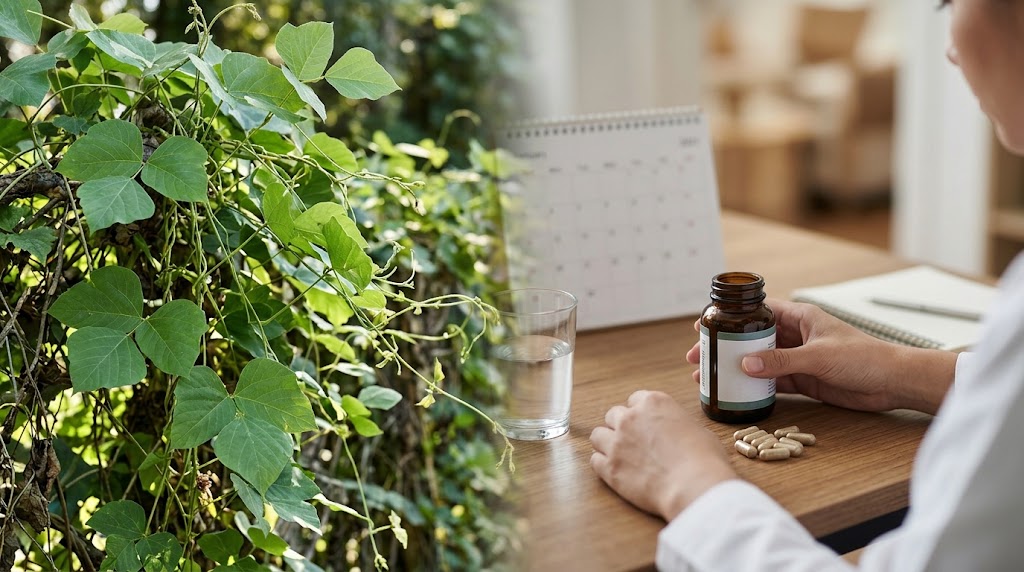
Kudzu is a fast-growing vine whose root has been used in traditional Chinese medicine for centuries, including for heavy drinking. Researchers at UC San Francisco put it to a modern test. In a double-blind trial, they gave 120 adults with alcohol use disorder, who binge drank at least once a week, either a standardized kudzu extract or a placebo for 12 weeks, alongside weekly counseling. Participants took a dose only on days when they expected to drink heavily, about two and a half hours beforehand.
Kudzu cut binge drinking. People who took it went from an average of about 2.15 binge-drinking days a week to about 1.4 by the end of the trial, while the placebo group barely changed, from 2.15 to about 2.1. The share of weeks with any binge drinking fell from 88% to 58% with kudzu, compared with 88% to 81% on placebo.
The effect lasted. Three months after people stopped taking the extract, the kudzu group still had significantly fewer binge-drinking days than the placebo group. Side effects were no more common than with placebo.
“What’s exciting about this approach is that people can use it when they know they may be at risk of heavy drinking, rather than taking a medication every day,” the researchers said.
Binge drinking, usually defined as five or more drinks on one occasion for men and four or more for women, is one of the most common and harmful patterns of alcohol use. Many people who binge drink do not want to quit alcohol entirely, and daily medications for alcohol use disorder are rarely used. A pill taken only before a risky night fits how many people actually drink.
Kudzu has been studied for alcohol before. In a small laboratory trial with 20 adults, a single 2-gram dose taken before drinking led people to drink fewer drinks and drink more slowly. Kudzu contains isoflavones, plant compounds that in animal studies consistently reduce alcohol intake. The new trial is a larger test in people’s everyday lives, over three months.
The second finding is about why the effect lasted. The researchers suggest that drinking less during treatment may have helped participants rethink their relationship with alcohol and build confidence that they could cut back, a change that outlasted the pills.
For anyone tempted to try it, the researchers caution that over-the-counter kudzu supplements may not work the same way. The trial used a standardized extract, and commercial products vary widely in what they contain. Anyone struggling with drinking can talk to a doctor about treatments with stronger evidence, including medications that can also be taken as needed. Supplements bought online carry their own risks, as AI analysis of a gray-market weight-loss drug recently showed, and what we drink every day matters for health in other ways too, as with tea and heart disease.
There are limits to what this shows. The trial was moderate in size, binge drinking was self-reported, and everyone also received weekly counseling, which may have helped both groups. Participants were recruited by UC San Francisco, and the results may differ elsewhere. The study was funded by the US National Institutes of Health.
Source
Santos GM, et al. “Targeted Use of Kudzu for Binge Drinking Among Adults With Alcohol Use Disorder: A Phase 2b Randomized Trial.” American Journal of Psychiatry, 2026.
DOI: 10.1176/appi.ajp.20251354