A 90-minute walk in nature, but not along a busy road, quieted a brain region linked to brooding over negative thoughts

More and more people live in cities, and rates of anxiety and depression have risen in many urban areas. Researchers at Stanford University wanted to know whether time in nature could affect one specific mental habit linked to depression: rumination, the tendency to go over negative thoughts about yourself again and again.
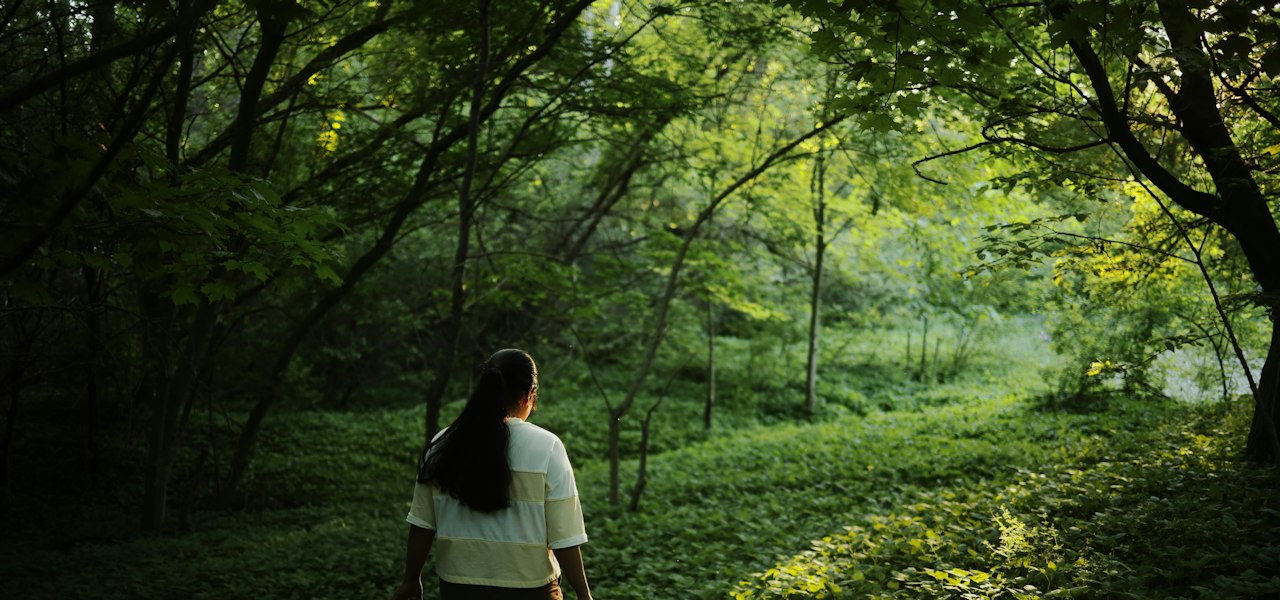
In a study published in PNAS in 2015, Gregory Bratman and colleagues recruited healthy adults who lived in cities. Each person filled out a questionnaire about rumination and had a brain scan. Then they were sent on a 90-minute walk, either through a grassy, oak-dotted area near the Stanford campus or alongside a busy road in Palo Alto.
After the walk, people who had walked in nature reported less rumination than before. People who had walked along the road did not.
The brain scans matched the questionnaires. In the nature walkers, activity dropped in the subgenual prefrontal cortex, a region that tends to be more active during sad, self-focused thinking and that has been linked to depression. In the urban walkers, activity in that area did not change.
The two walks were similar in length and physical effort, so the difference was not just about exercise. The researchers also measured heart rate and breathing, which did not explain the result.
The study is part of a growing body of research on nature and mental health. Other work has linked time in green spaces to lower stress, better mood and improved attention, and some cities and doctors now encourage nature time as part of supporting mental well-being.
For people who live in cities, the findings suggest that where you walk may matter, not just how much. A walk through a park, along a river or in a quiet green area may offer something that a walk along traffic does not.
The study was small, with 38 participants, and measured effects right after a single walk, so it cannot say how long the benefit lasts or whether repeated walks reduce the risk of depression. Participants also knew they were taking part in a study about walking. Still, the combination of self-reports and brain scans makes it one of the more striking pieces of evidence that nature affects how the mind works.
Source
Bratman GN, Hamilton JP, Hahn KS, Daily GC, Gross JJ. “Nature experience reduces rumination and subgenual prefrontal cortex activation.” Proceedings of the National Academy of Sciences, 2015.
DOI: 10.1073/pnas.1510459112