Scientists linked an invisible gas found in many American homes to a higher risk of heart failure in a study of 43,000 older women

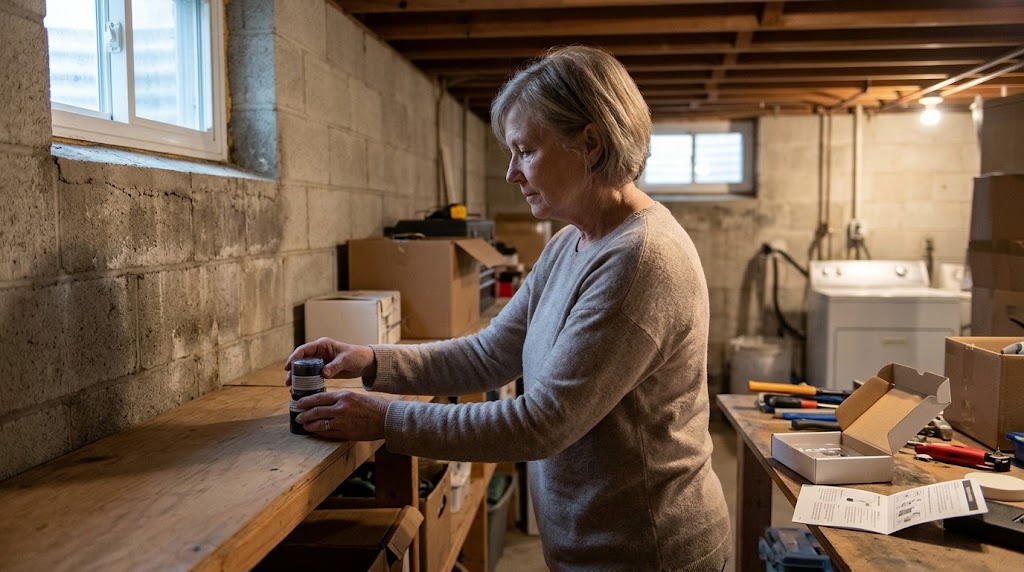
Radon is a colorless, odorless radioactive gas that seeps up from the ground through cracks in foundations and builds up inside homes. It is the second leading cause of lung cancer after smoking, and researchers have started to ask whether it harms the heart too. A team led by the UNC Gillings School of Global Public Health followed 43,188 postmenopausal women in the Women’s Health Initiative for an average of 16 years. They compared heart failure rates by the estimated radon levels where the women lived.
Women living in areas with estimated indoor radon above 4 picocuries per liter of air, the level at which the US Environmental Protection Agency recommends fixing a home, had a significantly higher risk of heart failure than women in areas below 2 picocuries per liter. They also had a higher risk of heart failure with reduced ejection fraction, the form in which the heart pumps weakly, and of dying from heart failure.
The link was particularly strong in women with a history of smoking.
“Heart failure is a globally burdensome and increasingly common form of cardiovascular disease among aging women,” said lead author Shu Chen of the UNC Gillings School. “So identifying readily testable and modifiable factors, like home radon levels, that may be related to it in this at-risk population is critical.”
This is not the first heart-related warning about radon from the same group of women. A 2024 study in Neurology of nearly 159,000 Women’s Health Initiative participants found that women living with radon above 4 picocuries per liter had a 14% higher risk of stroke, and that risk was elevated even at levels between 2 and 4, below the threshold at which the EPA advises action.
Radon is created when uranium in soil and rock breaks down. It enters through cracks in concrete slabs, porous foundation walls and crawlspaces, and levels vary hugely from one house to the next, even on the same street. Breathing it damages cells in the lungs, and researchers suspect it may also drive inflammation and changes in blood cells that affect the heart and blood vessels.
The second finding is about who may be most at risk. Women who had smoked showed the strongest association, which mirrors what is known about radon and lung cancer, where the two exposures together are far more dangerous than either alone.
For anyone living in a house, especially with a basement or ground-floor bedrooms, the practical step is simple: test for radon. Home test kits are cheap and widely available, and if levels are high, a mitigation system that vents the gas outside can lower them. Women’s heart risk is increasingly understood to depend on more than cholesterol and blood pressure, as new guidance from four US medical groups recently set out, and as research on hormone therapy continues to show.
There are limits to what this shows. Radon was not measured in each woman’s home. The researchers used estimates for the area where she lived, which can differ greatly from the real level indoors. The study is observational and cannot prove radon causes heart failure, and it is not known whether lowering radon reduces heart risk. All participants were older US women, mostly white.
Source
Chen S, et al. “Indoor Radon and Incident Heart Failure Among Postmenopausal Women.” JAMA Network Open, 2026.
DOI: 10.1001/jamanetworkopen.2026.42391
Also cited
Buchheit SF, et al. “Radon Exposure and Incident Stroke Risk in the Women’s Health Initiative.” Neurology, 2024.
DOI: 10.1212/WNL.0000000000209143